
ACTIVE COOLING VIA GREEN REFRIGERATION


Kilowatt-Scale Multi-Cell Elastocaloric Cooler
This is an energy-saving window film that does not block mobile phone signals. Conventional low-emissivity films rely on a metal layer to reflect infrared heat, but that same layer acts as a shield against radio-frequency signals. We adopted a laser-patterning-based fabrication strategy to introduce subwavelength periodic structures into metal-based low-e films on flexible substrates. These structures create a frequency-selective surface effect: radio-frequency signals can pass through, while the film continues to reflect thermal infrared radiation. The process has been demonstrated on a roll-to-roll compatible platform, confirming its suitability for large-area, continuous manufacturing. Prototype films maintain high visible transparency and effective thermal blocking, offering a practical way to combine energy efficiency with uncompromised indoor wireless communication.
Zero-Degradation Elastocaloric Cooling Device
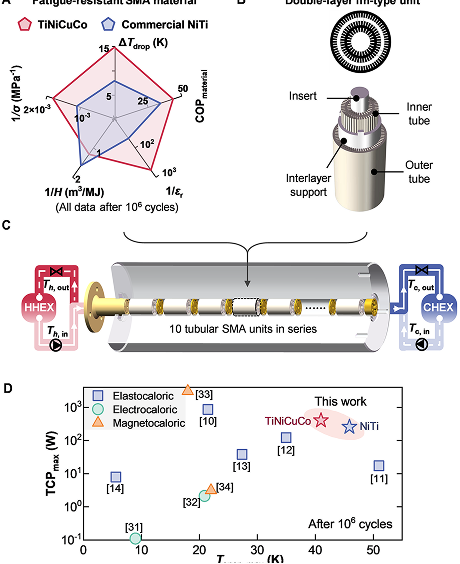
Long-term stability has been the Achilles’ heel of elastocaloric devices: existing systems typically lose 20–48% of their performance due to fatigue of the NiTi refrigerant. This device solves that problem. It is built with a newly developed fatigue-resistant TiNiCuCo shape memory alloy and a double-layer fin-type refrigerant structure. For the first time, a bulk fatigue-resistant SMA was used to construct an elastocaloric device that maintains a constant 400 W cooling power and a constant 41 K temperature span over 1 million operation cycles—with zero degradation. This proves that elastocaloric cooling can deliver the long-term reliability expected of a practical air conditioner.
Sub-Zero Elastocaloric Freezer
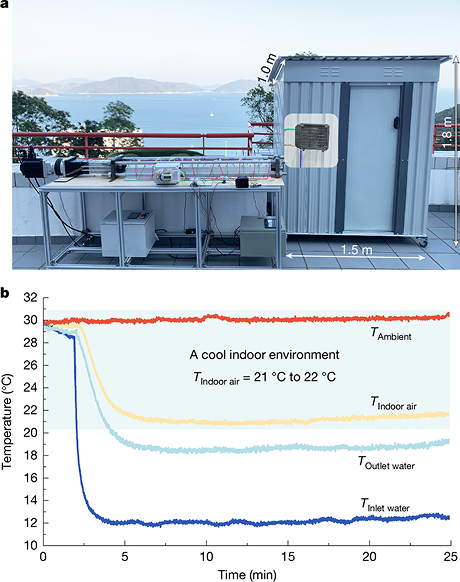
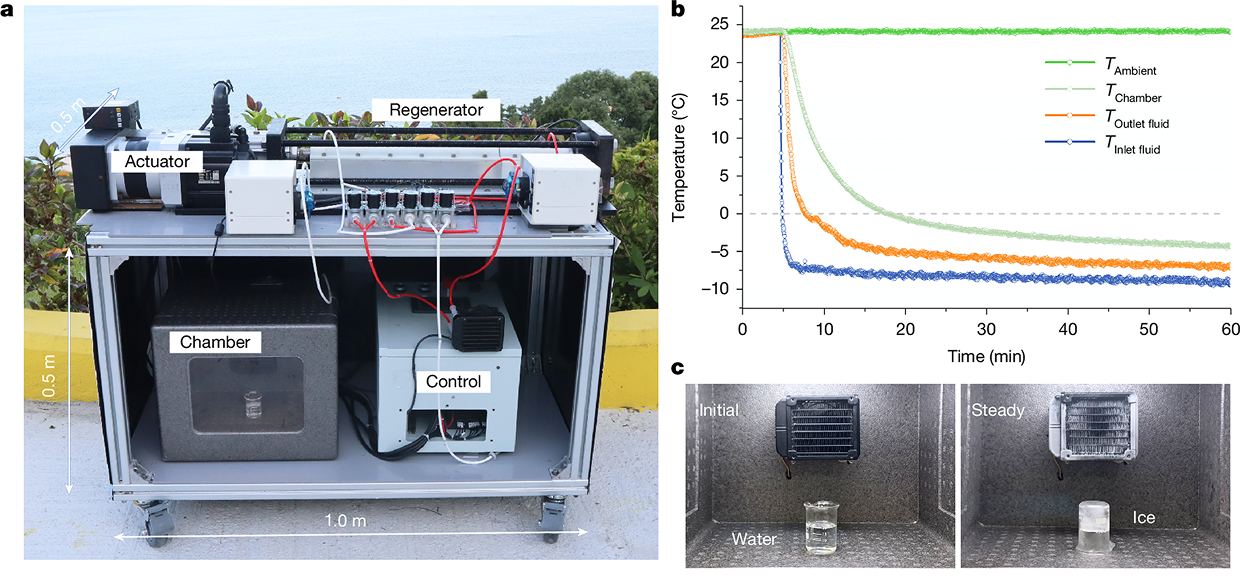
This is the world’s first elastocaloric cooler capable of working below freezing. By developing shape memory alloys with a suitably low phase-transition temperature, the team extended the operating range to an ambient temperature of -12°C. This breakthrough, accepted for publication in Nature, expands elastocaloric technology from air conditioning into the freezing and cold-chain markets, opening up a new green solid-state market that goes far beyond building cooling.
Thermochromic Building Skin with Integrated Energy Harvesting
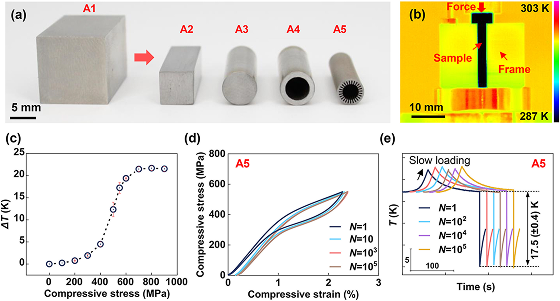
This is the core material inside the advanced elastocaloric coolers. It is a hierarchically structured bulk NiTiCuCo shape memory alloy that shows a large adiabatic temperature drop of 17 K and can withstand over 100 million compression cycles without obvious functional degradation. Such extreme fatigue resistance means the refrigerant itself can outlast the lifetime of the equipment, removing one of the biggest barriers to commercialisation. The material is already implemented in cooling prototypes achieving over 500 W of cooling power.
Low-Stress NiFeGaCo Single Crystal Refrigerant
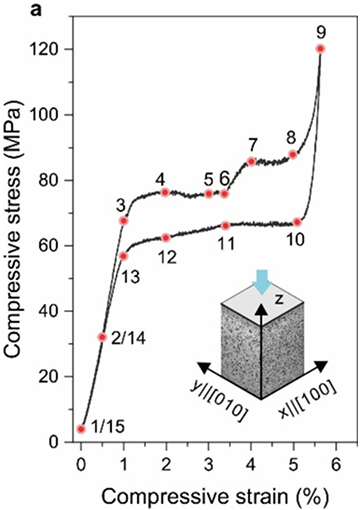
This single-crystal material drastically lowers the force needed to drive the cooling cycle. Its phase transformation starts at a stress of only about 70 MPa—roughly one-tenth of that required by conventional NiTi. Grown by the Bridgman method, the crystal sustains 10 million full transformation cycles with negligible residual strain and no degradation in its adiabatic temperature change (9.9 K) or material coefficient of performance (COPmat ~17.6). The very low actuation stress allows much smaller and lighter driving mechanisms, which is critical for integrating solid-state cooling into space-constrained building systems.