
MULTI-SCALE DECISION SUPPORT MODELING



Building-Scale Wall-Modelled Large-Eddy Simulation (WMLES) Framework
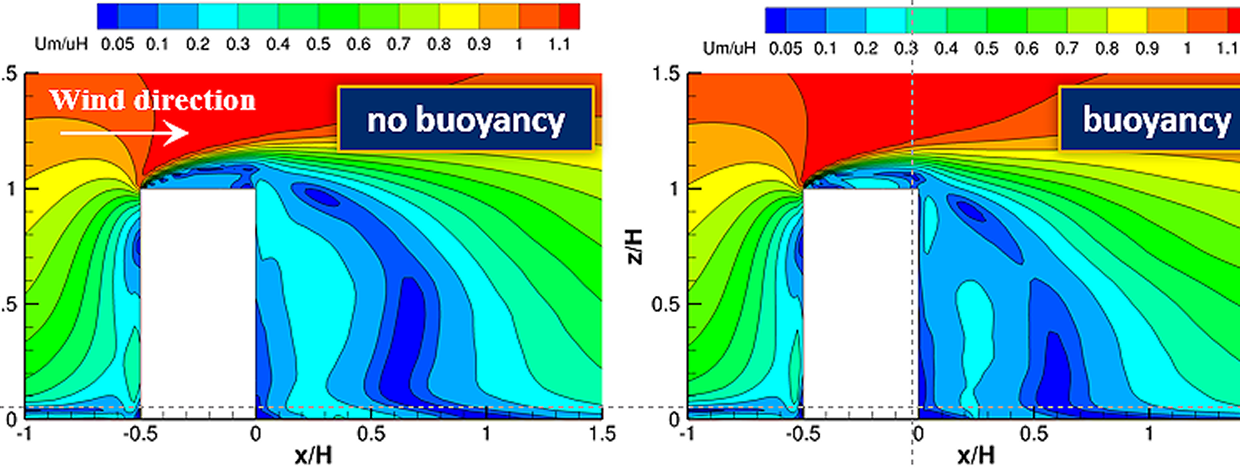
This is an advanced computational fluid dynamics tool that predicts wind flow, temperature, and pollutant dispersion around buildings with high accuracy and substantially reduced computational cost. It couples a new inflow turbulence generator based on the Random Fourier framework with an ordinary-differential-equation-based wall model, and incorporates buoyancy effects via the Boussinesq approximation. When compared with wall-resolved large-eddy simulation, it delivers comparable accuracy while cutting the computational time by over 80%. The framework has been extended to model indoor–outdoor coupled flows through open windows, making it possible to quantitatively evaluate ventilation, heat dispersion, and the performance of novel building materials in realistic urban settings.
City-Scale Co-Simulation Framework
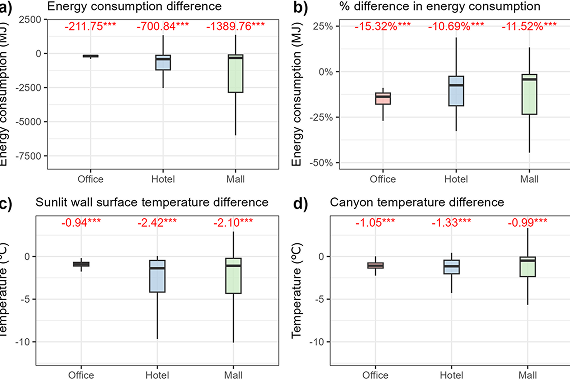
This tool links a building energy model (EnergyPlus) with an urban climate model (Vertical City Weather Generator) to capture the two-way interaction between building energy use and the outdoor thermal environment. Waste heat from buildings changes the local microclimate, which in turn affects building energy demand; the co-simulation captures this feedback loop. Validated on a Hong Kong office building, it has been used to assess the city-wide impact of technologies developed in this project—for instance, showing that reflective materials on rooftops are more effective at reducing both energy use and local air temperature than those on walls or glazing. The open-access code is available to support evidence-based deployment planning.